

“We partied every night! We would have a hotel room and just give the details out to friends and girls, ‘We’ll see you there!’” That line perfectly captures the wild spirit behind “Living After Midnight,” the song that helped turn Judas Priest from respected British metal veterans into full-blown American icons.
By the late 1970s, Judas Priest had already paid their dues. Formed in Birmingham, England, they had released several albums and built a loyal following in Europe. Yet success in the United States remained frustratingly out of reach. American radio was tough to crack, and heavy metal bands were still fighting for mainstream attention. Priest needed a song that captured their energy, attitude, and lifestyle in a way U.S. audiences could instantly understand.
That song arrived with British Steel in 1980. Recorded at Tittenhurst Park—once owned by John Lennon—the album stripped Judas Priest’s sound down to its essentials: sharp riffs, pounding rhythms, and unforgettable hooks. Among tracks like “Breaking the Law” and “Metal Gods,” “Living After Midnight” stood out as a celebration of nightlife, freedom, and rebellion. It wasn’t complicated or overly technical. Instead, it was pure, fist-pumping metal designed to be played loud.
Rob Halford later explained that the song reflected exactly how the band were living at the time. Touring constantly, partying hard, and thriving on the energy of the night, Judas Priest poured their real experiences into the lyrics. The line between life and music disappeared. “Living After Midnight” wasn’t an act—it was a statement of identity. Fans could hear it, feel it, and instantly connect.
Musically, the song’s power lay in its simplicity. Glenn Tipton’s grinding riff, K.K. Downing’s tight rhythm work, and Ian Hill’s steady bass created a groove that was impossible to ignore. Dave Holland’s drums kept everything driving forward, while Halford’s vocals balanced swagger with menace. The chorus was tailor-made for arenas, inviting crowds to shout along in unison. This accessibility helped Judas Priest break through to listeners who might not have previously embraced heavy metal.
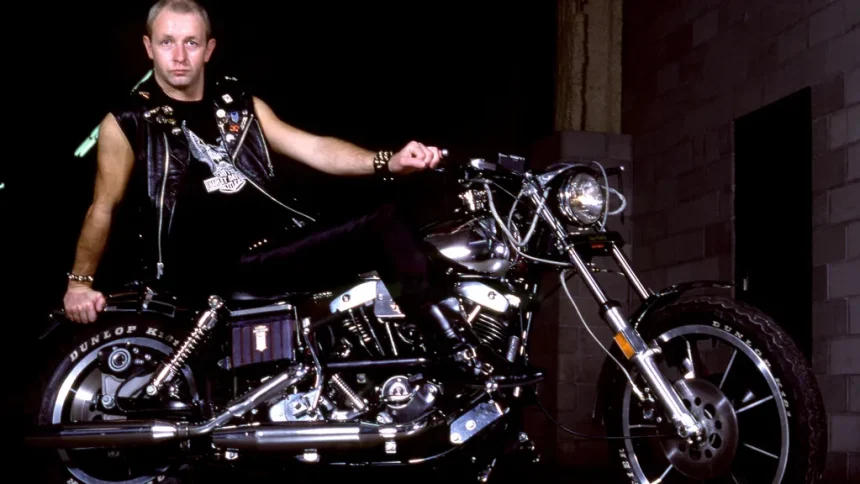
American radio and MTV played a crucial role. “Living After Midnight” received strong airplay on rock stations, while its video—featuring the band performing under dramatic lighting—gave U.S. audiences a clear image of what Judas Priest stood for. Leather, studs, confidence, and power became their visual signature. They didn’t just sound like metal; they looked like it. This image would go on to define the genre for decades.
The impact was immediate. British Steel became Judas Priest’s most successful album to date, especially in the United States. Tours grew bigger, venues expanded, and the band found themselves embraced by a new generation of American fans. “Living After Midnight” became a staple of their live shows and remains one of their most recognizable songs.
More than four decades later, the track still represents a turning point—not just for Judas Priest, but for heavy metal itself. It proved that metal could be raw, fun, and rebellious without losing its edge. And behind it all was a band living exactly the life they sang about, night after night, turning excess, energy, and freedom into a song that made them legends in America.